The AI Scam That Fooled Someone I Know (And How to Spot It Next Time)
This happened to a friend's mother three weeks ago.
Her phone rang. The caller ID said her son. The voice on the other end was her son — panicked, saying he'd been in an accident, he was in trouble, he needed money wired immediately. A "lawyer" got on the line and gave wiring instructions. She wired $4,000 before calling her actual son.
It wasn't him. It was an AI voice clone, generated from a few seconds of his voice pulled from a TikTok video he'd posted.
This isn't theoretical. This is what AI scams look like now. And they're going to get worse before they get better.
How Voice Cloning Works (In 60 Seconds)
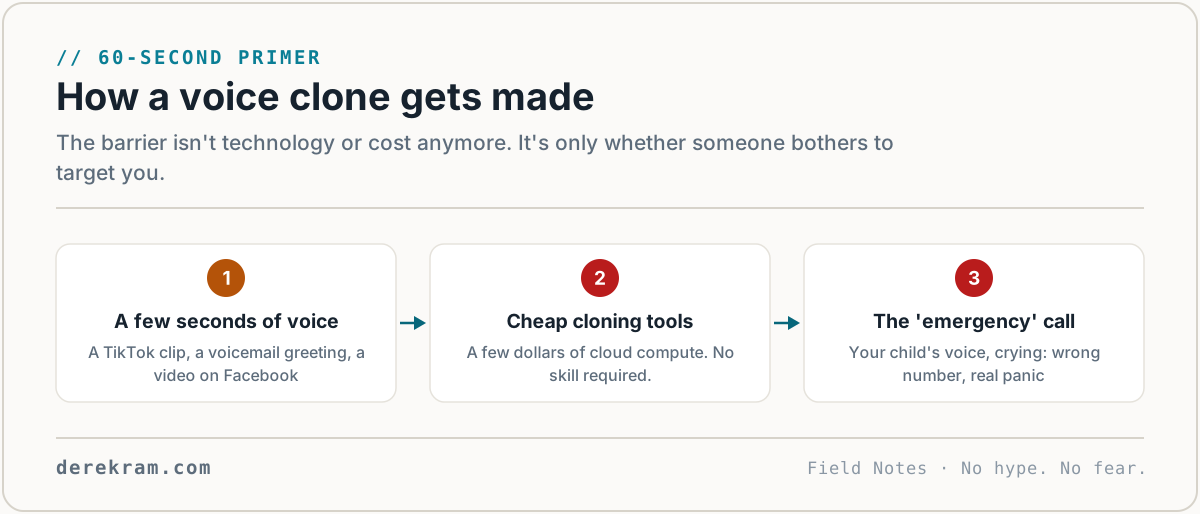
AI voice cloning needs two things: a sample of your voice, and about $5 worth of cloud compute.
The sample is the easy part. If you've posted a video on TikTok, Instagram, YouTube, or Facebook where you talk — even a few seconds — that's enough. A voicemail greeting, a TikTok clip, a few seconds of clear speech: all plenty. If you've done a podcast or a video call — that's plenty.
The cloning itself: you upload the sample to a service like ElevenLabs or any of a dozen others. Type text. It speaks in the cloned voice. Emotion, pacing, intonation — all there.
A year ago you could tell the difference. Now, on a phone call with background noise and emotional panic, a parent can't.
The Pattern of an AI Scam Call
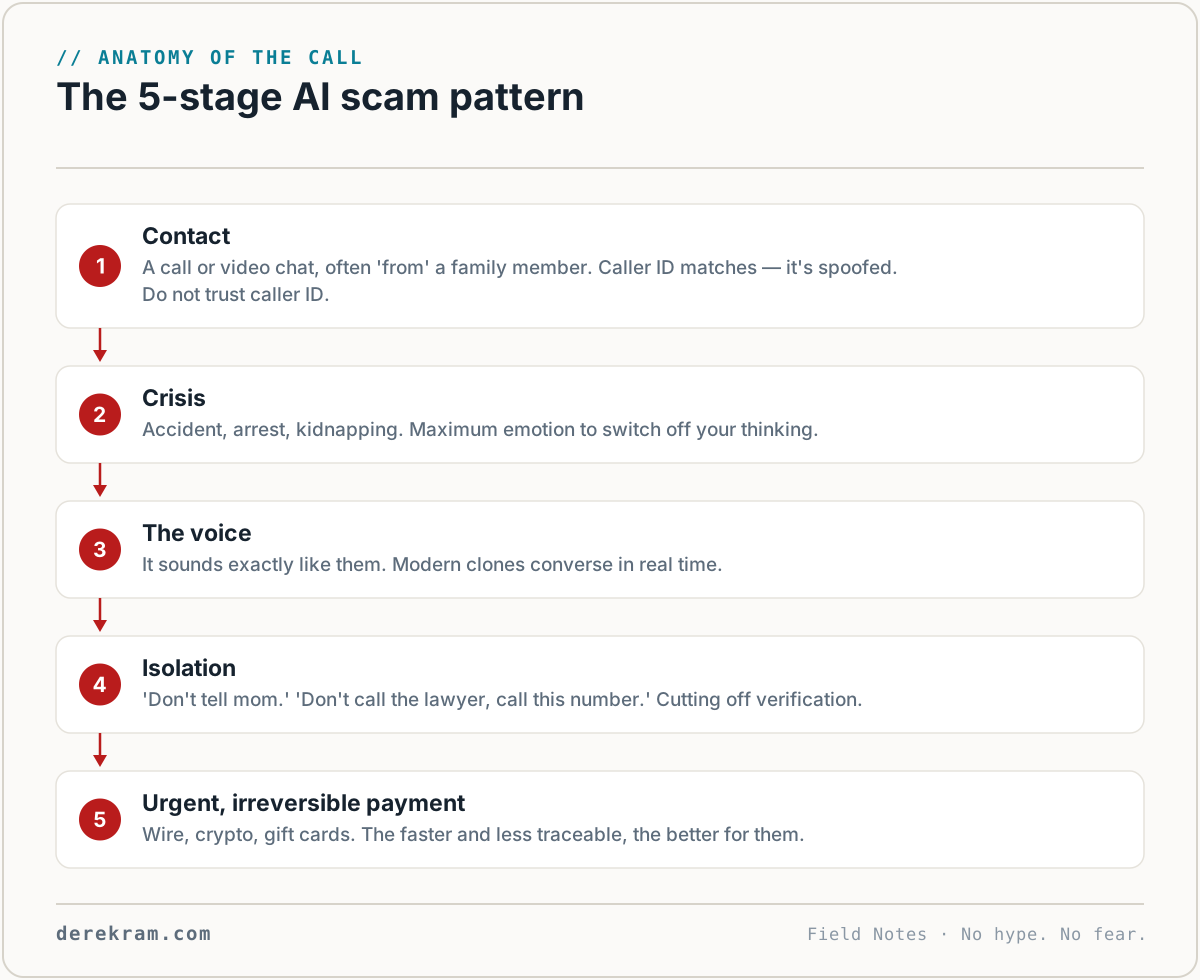
They all follow the same script. Recognizing the pattern is half the defense.
1. Contact: A call from a loved one's number. Caller ID can be spoofed. Do not trust caller ID. Ever.
2. Crisis: They're in trouble. An accident. Arrested. Kidnapped. Hospital. They need help RIGHT NOW.
3. Voice: It sounds exactly like them because it IS them — cloned. They're upset, crying, hard to understand. The emotion covers any slight audio artifacts.
4. Isolation: "Don't tell anyone." "I'm so embarrassed." "Please, just help me." The goal is to prevent you from calling their real number.
5. Urgency + Payment: Wire transfer. Gift cards. Crypto. Cash app. Something irreversible. Something NOW.
Once the money's sent, it's gone. Crypto and wire transfers are very hard to claw back — banks can sometimes recall a wire, but only if you report within hours. Gift cards aren't traceable.
The Family Code Word (Your Best Defense)
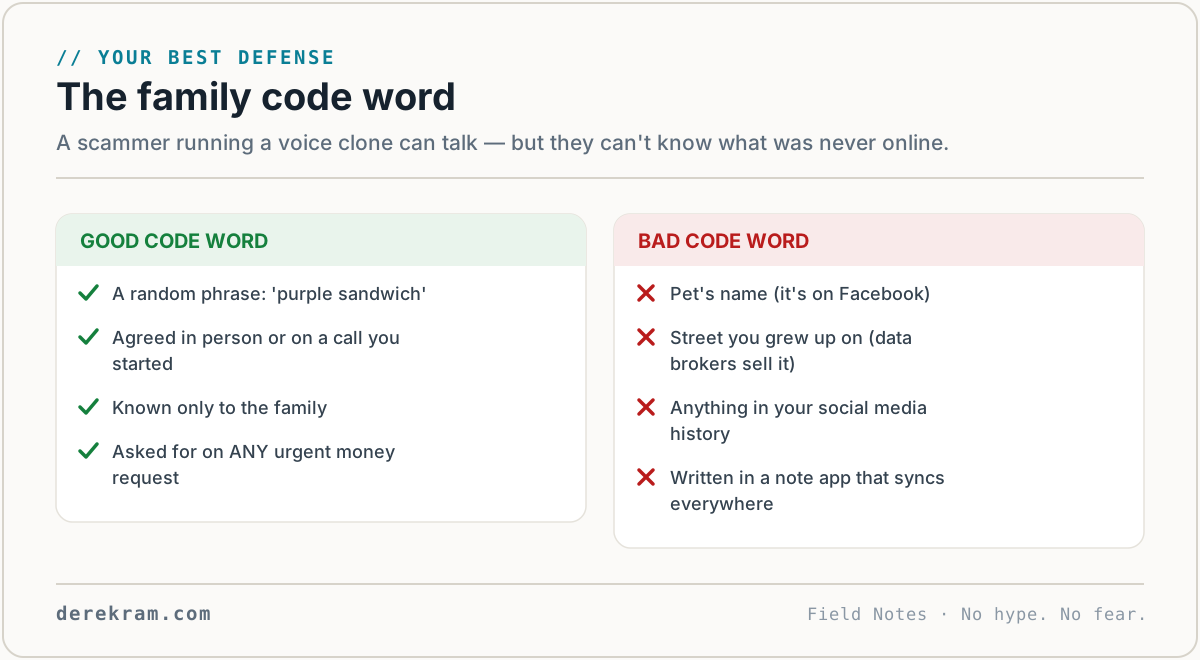
This one thing stops every voice clone scam. It costs nothing, takes five minutes, and works on everyone from kids to grandparents.
Pick a code word or phrase with your family. Something random that wouldn't come up in conversation. Not a pet's name. Not a birthday. Not something someone could find on social media.
Bad examples: "Buddy" (dog's name), "Florida" (vacation spot), "Go Blue" (known from Facebook).
Good examples: "Purple mongoose." "The waffles are burning." "Grandpa's tractor." Any random combination.
Here's the rule: If someone calls claiming to be family and asking for money or help, ask for the code word. No exceptions. If they don't know it, it's not them.
The code word doesn't get written down publicly. It doesn't go in texts. You agree on it in person or on a video call. You change it if it ever gets used in an actual emergency.
This is the single most effective defense against voice clone scams, and it works today.
Other Things That Help
The code word is your primary defense. These are layers.
Call them back. Hang up and call their real number. If they don't answer, text them. If they called from their "lawyer's phone," that's the first red flag.
Ask something only they'd know. "What did we eat for dinner last night?" "What's the name of the street you grew up on?" A scammer speaking through a clone can answer — just not correctly, if the detail was never posted online.
Slow down. Scams require urgency. If you're told to act NOW, don't. Take five minutes. Call someone else in the family. The world will not end in five minutes.
Be suspicious of payment methods. No legitimate emergency requires payment in gift cards or crypto. None. If they ask for gift cards, it's a scam. Full stop.
What If You Already Fell For It?
Stop engaging. Don't send more money. Don't keep the conversation going.
Preserve everything: call logs, text messages, wiring confirmation numbers, screenshots. These are evidence.
Report it:
Then tell your family what happened. The scammers may try again using a different angle. If your family knows, they're harder to fool.
And please — don't beat yourself up. These scams are designed by professionals to bypass rational thinking. Getting caught doesn't mean you're stupid. It means the scammer did their job.
The Code Word Conversation (Do This Tonight)
Text your family. Set up a group call. Agree on a code word. Make it a game — let the kids pick it. Something silly that everyone will remember.
Then tell everyone the rule: no code word, no money, no exceptions. Even if the voice sounds exactly right. Even if it sounds like an emergency.
Because now, sounding exactly right doesn't mean it is.
Get the Family Code Word Worksheet — a one-page guide to set this up with your family in 10 minutes. Free.
[Join the Digital Self-Defense list →]
Get the 5-Minute Digital Safety Checklist
Four things that make you harder to target. No jargon. No fear. Free.
Get the Checklist →